🚨
WSIB Update
Ontario’s new First Aid Program takes effect June 22, 2026.
Learn more →



Making Training Easier to Assign

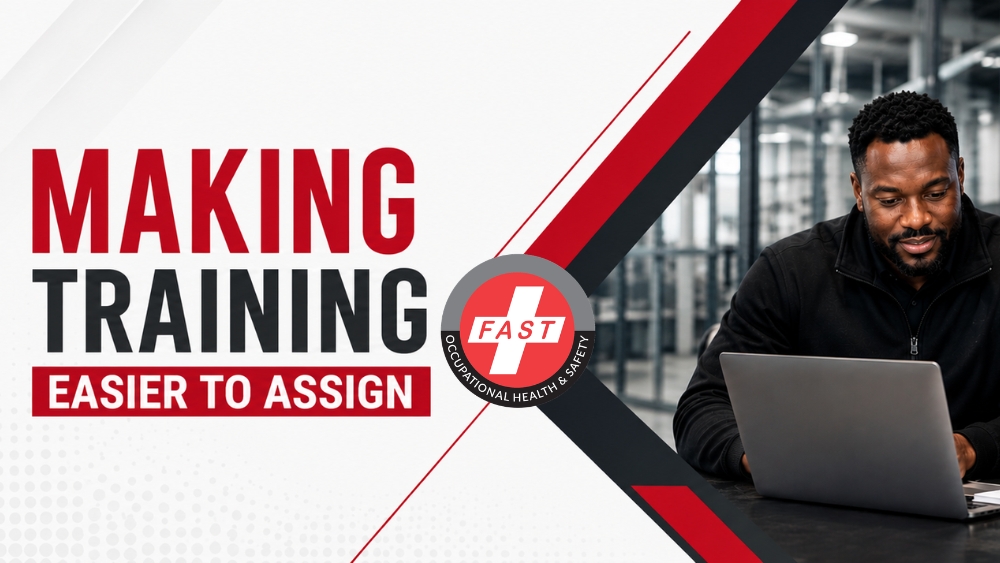
A new employee joins, or someone takes on a new role, and the question comes up: What training applies here?
In many cases, the answer isn’t immediately clear. It may depend on what was done previously, what others in similar roles have completed, or what requirements are documented somewhere. Sometimes, the answer relies on past experience — or on someone who knew how it was handled before.
Training is identified by reviewing records, asking questions, or piecing together what applies.
This process works, but it often requires starting from scratch — or close to it — each time.
Defining Training Based on Roles and Requirements
Training can also be organized around what actually drives the requirements, rather than relying on memory and repeated review.
In this model, training is grouped based on those requirements — such as a role, a work location, or specific hazards or responsibilities — instead of being determined separately for each person.
This is referred to as a training profile — a set of training requirements tied to a role, location, or responsibility.
In many Canadian workplaces, training requirements are shaped by a combination of regulatory expectations, operational needs, and internal policies.
By defining training based on these conditions, requirements can be established once and applied consistently. A role may carry a standard set of training. A location may introduce additional requirements. Certain responsibilities may add further expectations.
Individuals are then matched to those requirements, rather than being evaluated separately.
This does not require a complex system. It can be supported with simple tools — for example, a structured list or table that outlines training requirements for different roles or situations.
What This Looks Like in Practice
For example, a warehouse role may consistently require forklift training, workplace safety awareness, and site-specific procedures. In a different setting, an office-based role may involve workplace policies, accessibility training, or other organizational requirements.
When someone steps into a role, training can be understood by referring to that list. If additional factors apply — such as the location they work in or responsibilities they take on — those can be added in the same way.
This creates a more predictable process. Instead of piecing things together each time, training can be checked against what has already been defined.
The result is a clearer and more consistent way to approach the question. Training is no longer dependent on memory or past examples — it can be understood based on what is already in place.
Supporting a More Consistent Approach
Some organizations use documents or spreadsheets to outline training requirements for different roles or situations. This can work, particularly in smaller environments, but it often relies on manual updates and consistent attention to keep information current as roles, locations, and responsibilities change.
Others use internal tools or dedicated systems to manage this more formally and maintain that structure over time.
What matters is having a consistent way to define and maintain those requirements so they can be applied without needing to be rebuilt.
F.A.S.T. Rescue’s Training and Compliance System includes a built-in training profile structure that allows organizations to define training requirements once and apply them consistently across roles, locations, and responsibilities.
If you’re interested in seeing how this works within the system, please contact us to arrange a demonstration.