

Blog
What Is a Workplace Risk Assessment? A Practical Guide for Employers

If you’ve worked in health and safety or have been part of a health and safety team, you already know that risk assessments are the backbone of any strong safety program.
As important as they are, unfortunately they don’t always get the attention they truly deserve. Let’s be honest—risk assessments are often completed once and then never revisited.
Templates get filled out because “we need it for compliance.” Or hazards in the workplace go undocumented because “everyone knows it’s there and knows how to avoid it.”
Most safety managers understand the theory behind risk assessments. The real challenge is making them meaningful in the real world, especially when balancing compliance requirements, operational pressures, and limited time.
In this article, we’ll look at why risk assessments matter and what organizations can do to make them more effective.
What Is a Workplace Risk Assessment?
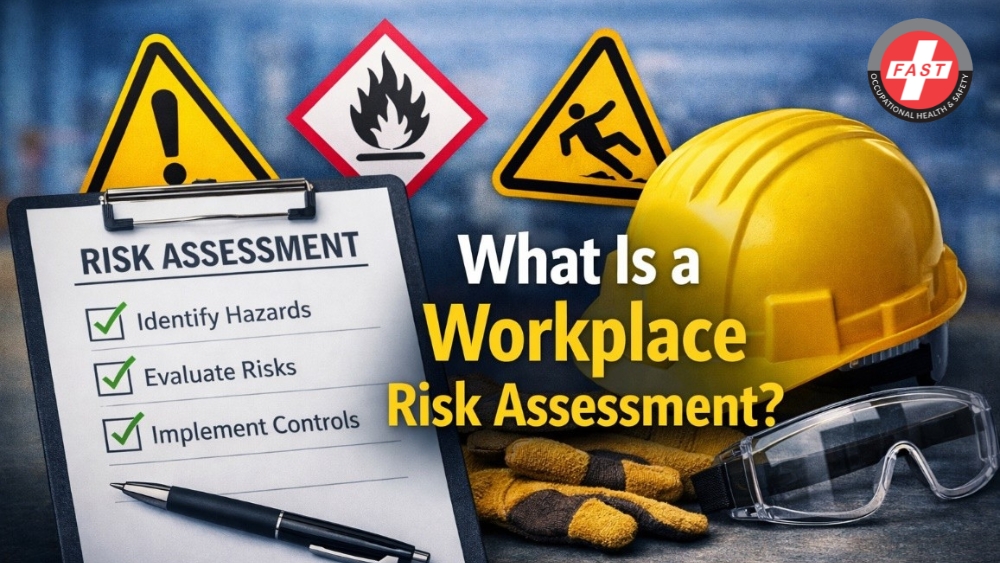
A workplace risk assessment is a structured process used to identify hazards, evaluate the level of risk associated with those hazards, and determine what controls should be implemented to reduce or eliminate the risk.
In Canada, employers are responsible for taking every reasonable precaution to protect workers. Risk assessments are one of the most effective ways to support that responsibility. By identifying hazards before incidents occur, organizations can take proactive steps to improve safety and prevent injuries.
At its core, a risk assessment asks three simple questions:
- What hazards exist in the workplace?
- How likely is it that someone could be harmed?
- What controls can be put in place to reduce the risk?
When this process is done regularly and updated as conditions change, it becomes a valuable part of maintaining a safe and compliant workplace.
Where Risk Assessments Start to Break Down
In theory, risk assessments are straightforward. Hazards are identified, risks are evaluated, and controls are implemented.
In practice, it doesn’t always work that smoothly.
One of the most common challenges is that risk assessments slowly turn into a paperwork exercise instead of a safety tool. They get completed because they’re required, filed away somewhere, and rarely revisited unless an auditor asks for them.
Another challenge is that workplaces change constantly. New equipment is introduced, processes evolve, staff move into new roles, and production pressures increase.
If risk assessments aren’t revisited regularly, they quickly stop reflecting what’s actually happening on the floor and instead become outdated documents that no longer support decision-making.
There’s also the reality that some hazards eventually get accepted as “part of the job.” When that happens, they stop being questioned and may never make it onto the risk assessment in the first place.
None of this typically happens because people don’t care about safety. More often, it happens because risk assessments are treated as a compliance requirement rather than an active tool for managing workplace risk.
A Quick Refresher: Hazard vs Risk
Even within experienced safety teams, there can still be confusion between hazards and risks. Clarifying the difference is important because it directly affects how safety priorities are determined.
A hazard is anything with the potential to cause harm. This could include machinery, chemicals, working at heights, or even something as simple as poor housekeeping.
A risk refers to the likelihood that the hazard will actually cause harm and the severity of the potential consequences.
Understanding this difference helps safety teams prioritize effectively. Not every hazard carries the same level of risk, and risk assessments help determine which issues require the most immediate attention.
Without that evaluation, organizations may spend time addressing minor concerns while more significant risks remain unresolved.
Why Risk Assessments Still Matter
At the end of the day, risk assessments are really about one thing: preventing incidents before they happen.
When they are done properly, they give organizations a structured way to step back and ask a few critical questions:
- What hazards exist in this workplace?
- Who could be affected?
- How likely is it that someone could get hurt?
- What controls can reduce the risk?
Answering these questions early allows organizations to address potential issues before they lead to injuries, equipment damage, or operational disruptions.
For safety professionals and employers, that proactive approach is where risk assessments provide the most value.
When Risk Assessments Should Actually Happen
One of the most common misconceptions is that risk assessments are completed once and then filed away.
In reality, they should be reviewed whenever workplace conditions change.
Examples include:
- Introducing new equipment or machinery
- Changing work processes or procedures
- Adding new tasks or responsibilities
- After an incident or near miss
- During routine workplace inspections or safety program reviews
If something changes in the workplace, it’s a strong signal that the risk assessment should be reviewed as well.
5 Signs Your Risk Assessment Needs Updating
Even when risk assessments are completed properly, they can become outdated faster than people realize.
Here are a few indicators that it may be time for a review.
- Equipment or Processes Have Changed: New tools, machinery, or workflow changes can introduce hazards that were not previously considered.
- There Has Been an Incident or Near Miss: Near misses often reveal gaps in existing safety measures.
- Workers Are Raising Safety Concerns: Workers are often the first to notice when something isn’t safe. New concerns should prompt a reassessment of risks.
- Layout or Workflow Has Changed: Even small changes in workspace layout, storage areas, or traffic flow can affect safety risks.
- It Has Been a Long Time Since the Last Review: If a risk assessment hasn’t been reviewed in a while, the workplace has likely evolved.
- How Training Supports Better Risk Assessments : Risk assessments do not happen in isolation. They work best when supported by a strong safety program and a workplace culture that encourages hazard awareness.
Training plays an important role in making that possible.
For example, Joint Health and Safety Committee (JHSC) training helps committee members understand how to identify hazards, evaluate risks, and recommend appropriate controls. When committee members are properly trained, they can contribute more effectively to inspections, investigations, and safety improvements.
Training programs focused on hazard recognition, workplace compliance, and incident prevention also help supervisors and workers understand their role in identifying and managing risks.
When more people understand how risks are assessed and controlled, the entire safety program becomes stronger.
The Big Takeaway
Risk assessments aren’t just about meeting regulatory requirements or completing documentation.
They are one of the most practical tools safety professionals have for identifying hazards, evaluating risks, and preventing workplace incidents.
When treated as an ongoing process instead of a one-time task, they become far more valuable—not just for compliance, but for building safer workplaces overall.
And ultimately, that’s what most of us working in health and safety are trying to accomplish.
Supporting Your Workplace Safety Program
If your organization is looking to strengthen its safety program, training can play an important role.
Programs such as Joint Health and Safety Committee (JHSC) certification, first aid training, and other workplace safety courses help organizations build the knowledge and systems needed to identify hazards early and manage risks effectively.
Providing workers, supervisors, and committee members with the right training helps ensure safety programs remain active, informed, and aligned with regulatory requirements.
Written by: Shaela Nathan-Turner
Health & Safety Instructor Trainer