

Not Everyone Gets Help: A Conversation About Who Receives CPR

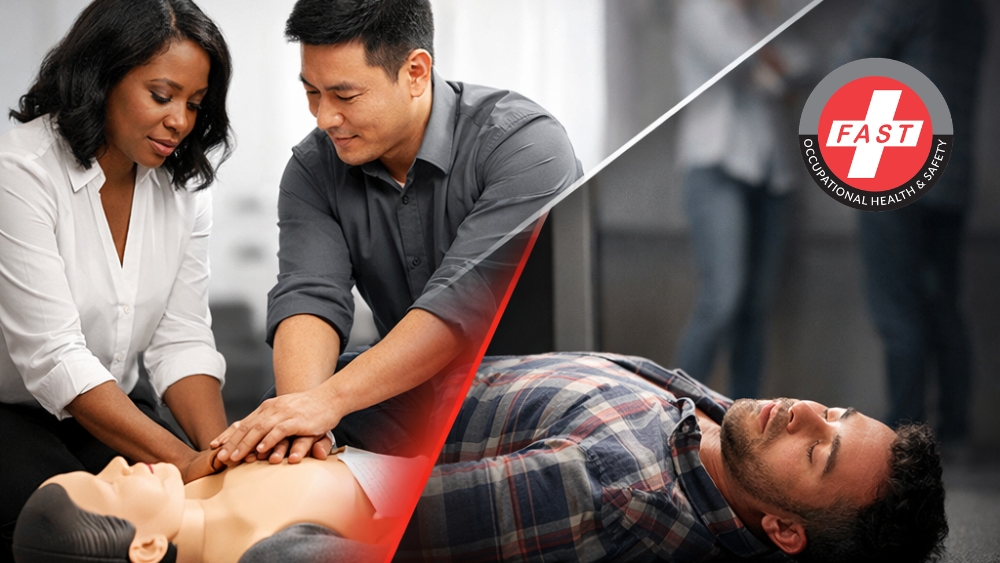
If someone collapsed in front of you, would you help them?
Most people would like to think they would. We want to believe we’d step in and do the right thing.
But after attending the 2025 Cardiac Arrest Survival Summit (CASSummit2025) in Tempe, Arizona, I was faced with something that’s hard to ignore:
Not everyone has the same chance of receiving CPR.
Did you know that people are less likely to aid women? Or to people of colour?
That’s something we need to talk about.
Because when you look at the data, it’s not subtle:
- Black and Hispanic individuals are 26% less likely to receive CPR at home, and up to 37% less likely in public compared to white individuals
- Women are 14% less likely to receive bystander CPR than men
And it doesn’t stop there.
Some research shows that the survival benefit of CPR can be up to three times higher for white patients compared to Black patients—and higher for men than women.
So this isn’t just a perception.
It’s consistent, measurable and it’s happening in moments where seconds matter most.
A Moment That Stuck With Me
There was one moment during the summit that really stayed with me.
It came up that there are still instructors—within our own industry—who are unwilling to teach using manikins with darker skin tones or female anatomy.
They stated in public forums that they are not jumping on the “woke” bandwagon.
And my immediate thought was:
What does woke mean to you? Why does my life matter less than yours?
If there’s hesitation in a controlled training environment… what happens when it’s a real person?
This Isn’t Just About Skill
One thing that kept coming up at the summit is this:
It’s not just about knowing what to do. It’s about feeling confident enough to actually do it.
And confidence comes from:
- what we’re exposed to
- how we’re trained
- who we see represented in that training
If someone has only ever practiced on one type of manikin, one type of scenario, one version of a “patient” … it makes sense that hesitation shows up when reality looks different.
And in an emergency, hesitation costs time and time costs life.
The Bigger Picture
Another key takeaway: survival isn’t just about one person stepping in.
It’s about the system as a whole:
- Who has access to training
- Where AEDs are placed
- How quickly help can arrive
- Whether people feel confident enough to act
Some communities face more barriers than others and those barriers compound.
So, when we see disparities in CPR, it’s not because people don’t care.
It’s because the system hasn’t set everyone up equally.
So What Do We Do With This?
This is the part I keep coming back to.
Because hearing it at a conference is one thing.
Actually doing something with it is another.
For me, it means:
- Making sure our training reflects the real world
- Being open to conversations that might feel uncomfortable
- Focusing on building real confidence—not just checking boxes
- Taking a closer look at who we’re reaching… and who we’re missing
Because this isn’t just about CPR.
It’s about whether people feel seen, included, and capable of stepping in when it matters.
Final Thought
Everyone deserves the same chance at survival.
That’s the standard. And if we’re serious about the work we do in this industry, then this is a conversation we need to keep having— not just at conferences, but in our classrooms, our training, and our day-to-day lives.