
Blog
Know Your Rights at Work: The Three Rights That Help Keep You Safe

Every day, millions of people go to work expecting to do their job and return home safely at the end of the day.
Unfortunately, workplace injuries still happen far too often. Across Canada, thousands of workers are injured on the job each year, and many of those injuries could have been prevented.
One of the most important ways to prevent workplace injuries is simple: workers need to know their rights.
When workers understand their rights, they are better equipped to recognize hazards, speak up about unsafe conditions, and protect themselves and their coworkers.
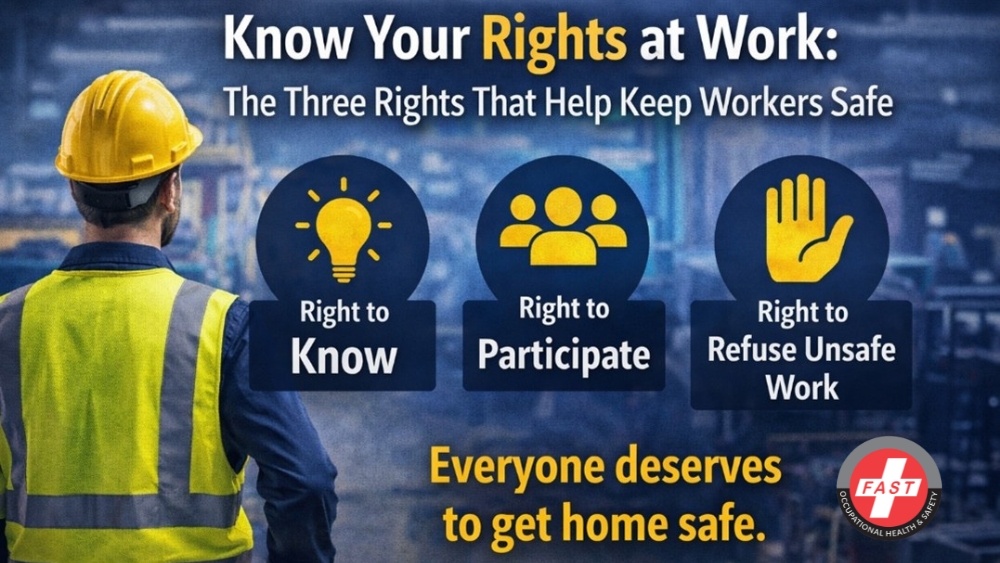
In Canada, workers have three fundamental rights that are designed to help keep them safe at work. These rights are protected under occupational health and safety legislation.
These are known as:
- The Right to Know
- The Right to Participate
- The Right to Refuse Unsafe Work
Understanding these rights is one of the first steps toward creating a safer workplace for everyone.
The Right to Know
The Right to Know means that workers have the right to be informed about hazards that may affect their health or safety.
Before performing a task or working in an environment, workers should know:
- What hazards exist in the workplace
- How those hazards could cause harm
- What procedures must be followed to work safely
- What protective equipment is required
This information may be provided through safety training, workplace procedures, safety meetings, or signage.
For example, if you are working with chemicals, you should receive training on how to handle them safely and understand what risks they present. If you are working around machinery, you should know the hazards involved and how to operate the equipment safely.
You should never be expected to perform work without understanding the risks involved.
Knowing the hazards around you helps you make safer decisions on the job.
The Right to Participate
Workplace safety works best when everyone is involved.
The right to participate means workers have the ability to take part in improving safety in their workplace.
This can include:
- Reporting hazards or unsafe conditions
- Sharing safety concerns with supervisors
- Participating in safety meetings
- Being involved in workplace inspections
- Serving on a Joint Health and Safety Committee (JHSC)
Workers often see hazards first because they are the ones performing the work every day.
Speaking up about unsafe conditions helps prevent incidents before someone gets hurt.
A strong safety culture is one where workers feel comfortable raising concerns and know their voice will be heard.
The Right to Refuse Unsafe Work
The right to refuse unsafe work is one of the most important protections workers have.
This doesn’t mean a worker can refuse a task simply because they don’t like it.
If a worker believes that a task is dangerous to their health or safety, they have the legal right to refuse that work.
Examples might include situations where:
- Equipment is damaged or unsafe
- Proper training has not been provided
- Required safety equipment is missing
- Conditions create a serious hazard
If you believe the work is unsafe, you should report the concern to your supervisor so it can be investigated.
There is a clear process for addressing work refusals under occupational health and safety legislation, and workers are protected from retaliation for raising legitimate safety concerns.
The purpose of a work refusal is not to create problems — it is to prevent injuries.
Why These Rights Matter
Workplace safety is a shared responsibility between employers, supervisors, and workers.
Employers are responsible for providing safe workplaces. Supervisors are responsible for ensuring work is performed safely. Workers play an important role by following procedures and speaking up when something is wrong.
When workers understand their rights, hazards are more likely to be identified early and addressed before incidents happen.
Too often, workplace injuries occur because someone felt unsure about speaking up, didn’t understand the hazard, or didn’t realize they had the right to question unsafe work.
Knowing your rights gives you the confidence to protect yourself and others.
The Big Picture
Workplace safety is not just about policies, procedures, or regulations.
It’s about people.
Every worker’s life is valuable. Behind every worker are family members, friends, and loved ones who expect them to come home safely at the end of the day.
Understanding your rights at work helps ensure that hazards are identified, concerns are taken seriously, and unsafe situations are addressed before someone gets hurt.
When workers know their rights, they are better equipped to speak up, ask questions, and take part in keeping their workplace safe.
Because at the end of the day, there is only one thing that truly matters:
Getting home safely to the people who matter most.
Written by:
Shaela Nathan-Turner
Health & Safety Instructor Trainer